
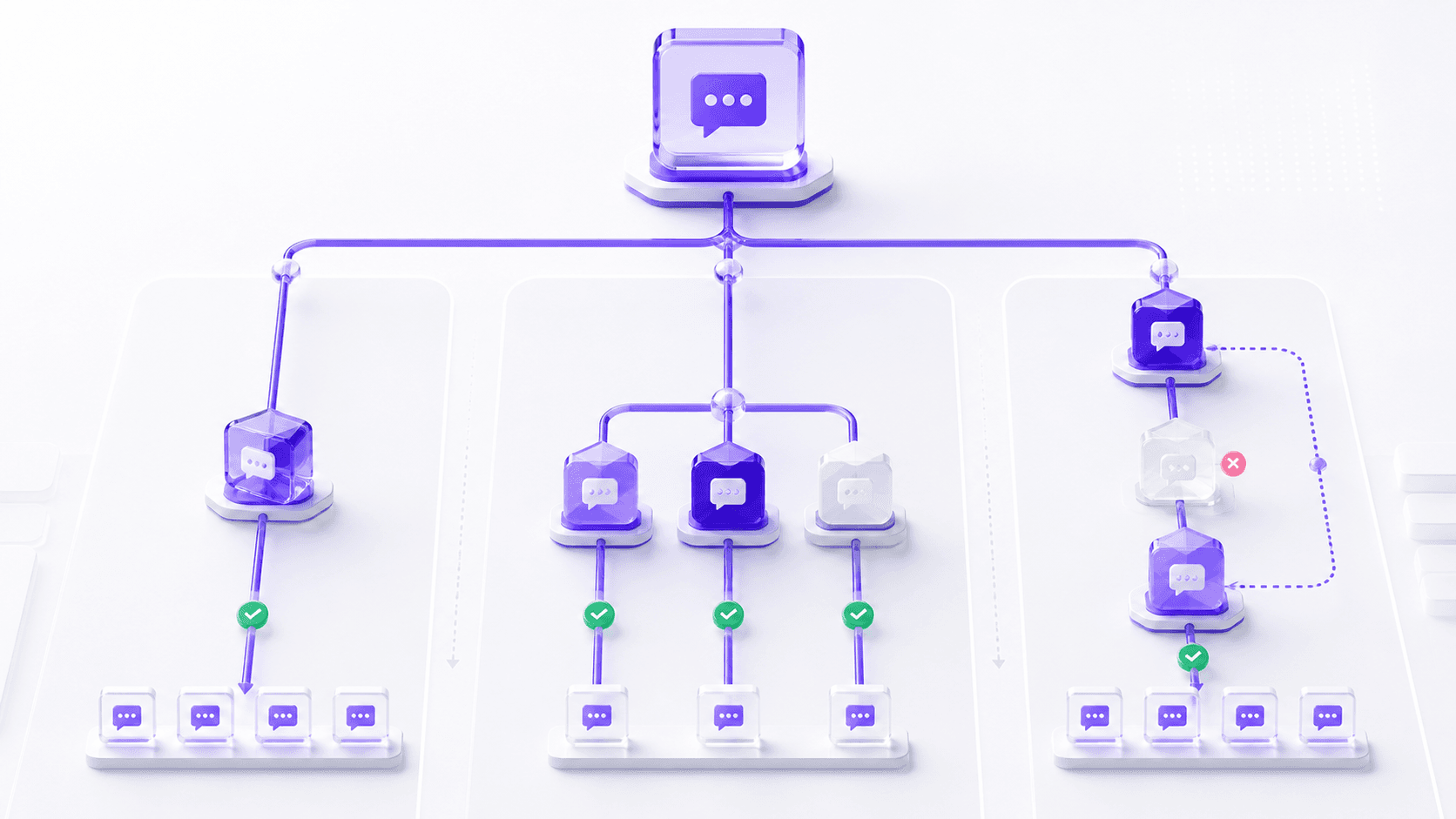
The correct SMS route depends on what the campaign needs. A one-off operational message, a large scheduled send, and a continuity-sensitive alert do not necessarily need the same provider behavior. IntelliSend exposes three routing modes so that choice is made when the campaign is configured.
Single routing sends campaign traffic through one connected provider. It is the simplest option and is appropriate when a specific account, sender, destination capability, or commercial agreement must be used. The tradeoff is straightforward: the campaign depends on that connection for the send.
Before using it, verify credentials, sender availability, balance, and destination support. Simplicity works well when those requirements are stable and the risk is understood.
Round-robin routing distributes work across the selected provider connections. It is useful when traffic should be shared rather than held behind one route. Distribution can reduce concentration, but it also makes consistency important: every participating provider needs compatible senders, destinations, and message behavior.
Round robin is not the same as failover. It intentionally uses multiple providers during normal operation; it does not express a primary and backup priority.
Failover routing starts with a preferred provider and continues through the configured backup order when the active route cannot send. This model is designed for continuity. The route is reusable, visible, and separate from the campaign itself, which makes it easier to review and test.
Choose the smallest model that satisfies the campaign. Use single routing for a deliberate provider choice, round robin for intentional distribution, and failover when provider priority and recovery order matter.