
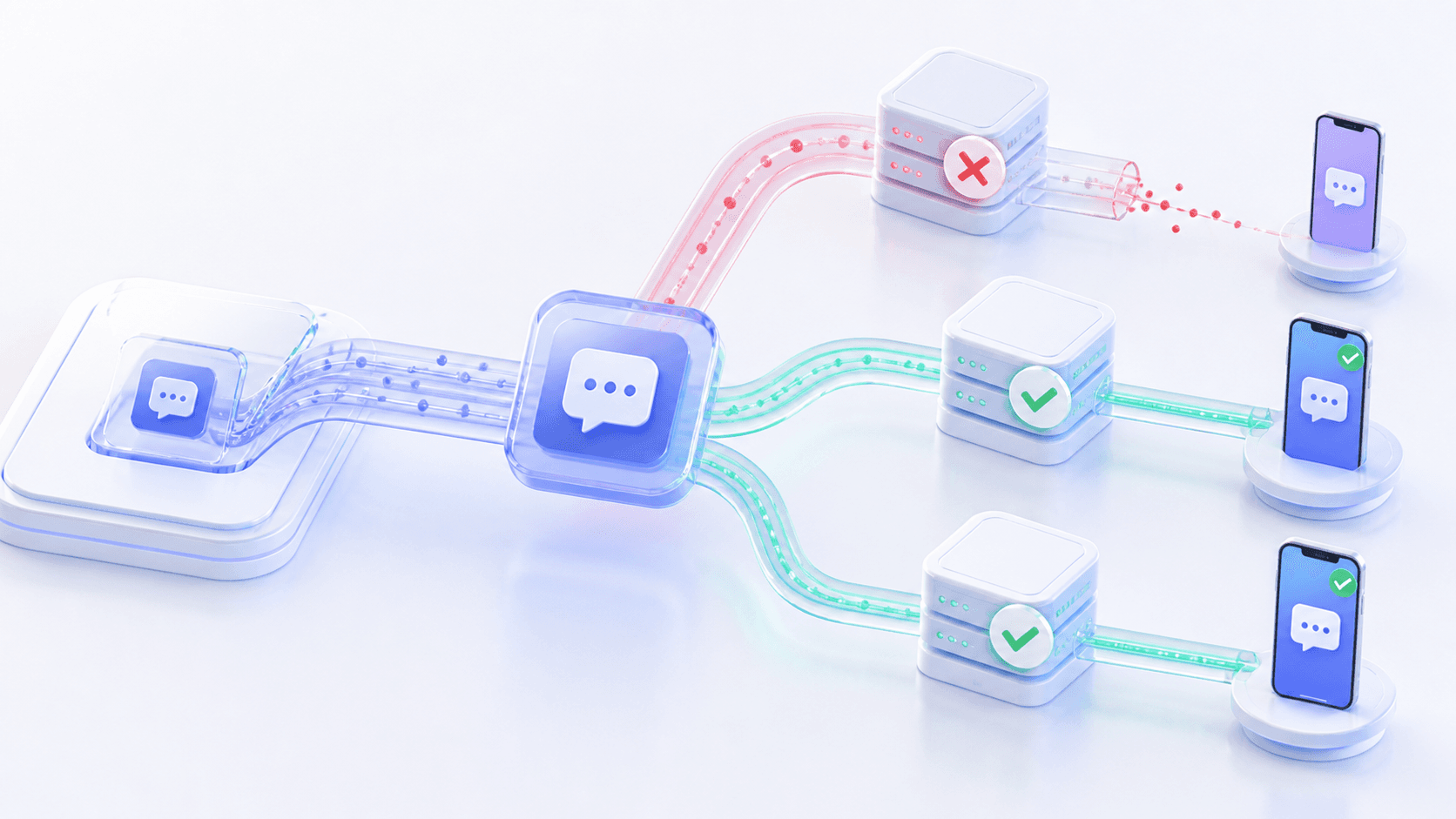
Connecting an application to a reputable SMS provider solves delivery access, but it does not remove dependency risk. Credentials can expire, balances can run low, a sender can be rejected, an upstream API can slow down, or a carrier route can stop accepting traffic. If every message uses that same connection, the provider becomes a single operational decision point.
IntelliSend addresses that problem by keeping multiple provider connections in one workspace and letting a campaign use an ordered failover route. The primary provider remains the first choice. A connected backup is available when the active route cannot send.
Failover should not mean “try everything and hope.” A route needs a deliberate provider order, valid credentials, approved senders, sufficient balance, and a clear understanding of which destinations each connection supports. The visual route designer makes that order reviewable before a campaign starts.
The platform currently contains working integrations for TouchSMS, ClickSend, and SMSGlobal. Each integration has different behavior: ClickSend can register delivery webhooks, SMSGlobal can return delivery receipts through its callback format, and TouchSMS can be checked through its message-status endpoint. A reliable route accounts for those differences instead of pretending every provider is identical.
The best time to discover that a backup sender is invalid is not during an incident. Validate provider credentials, confirm sender configuration, send controlled tests, and review message logs for both the primary and backup connections.
Failover improves continuity, but it is not a guarantee of carrier delivery. Its real value is operational: fewer manual decisions during a provider problem, a reusable recovery order, and enough delivery evidence to understand what happened afterward.